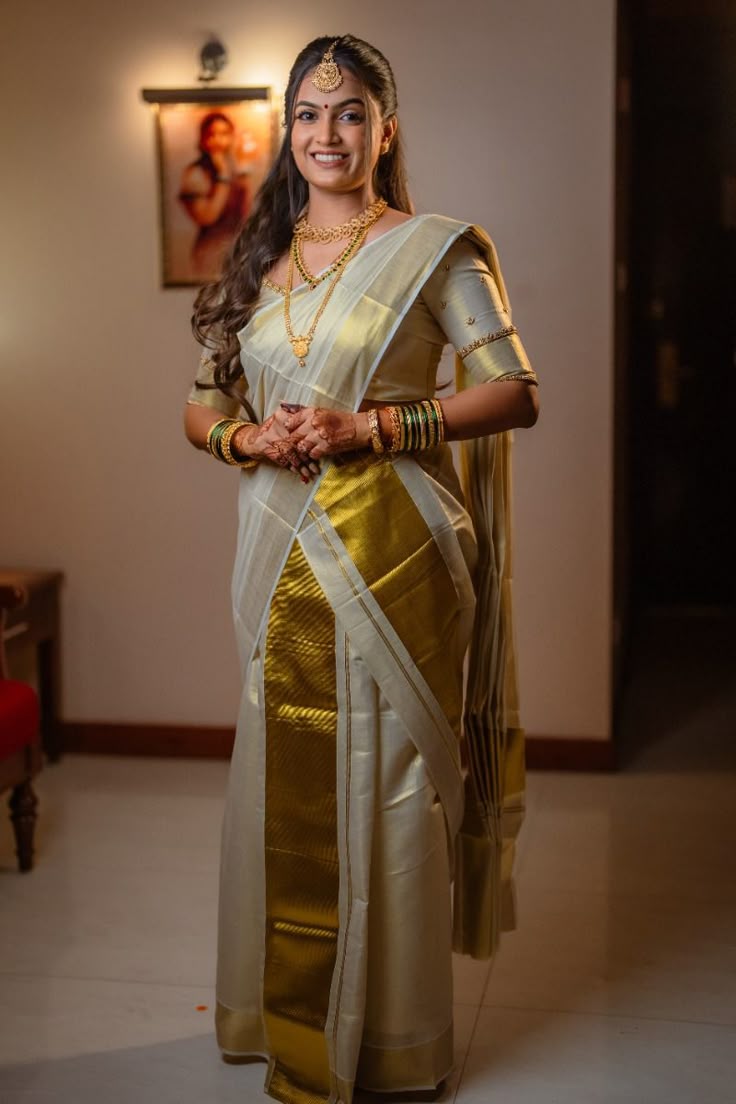
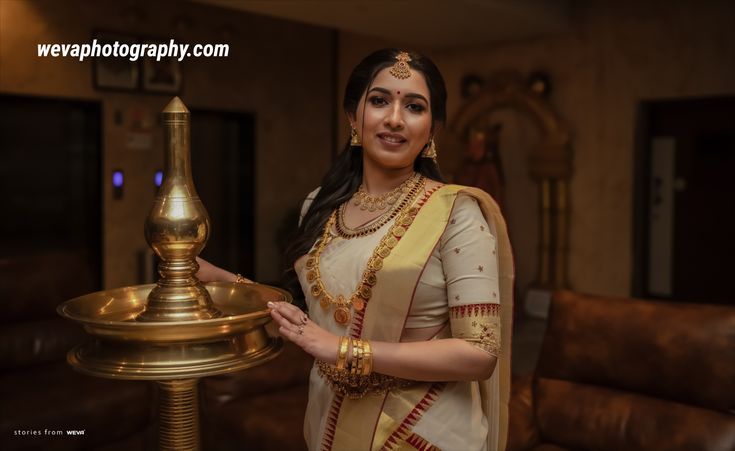
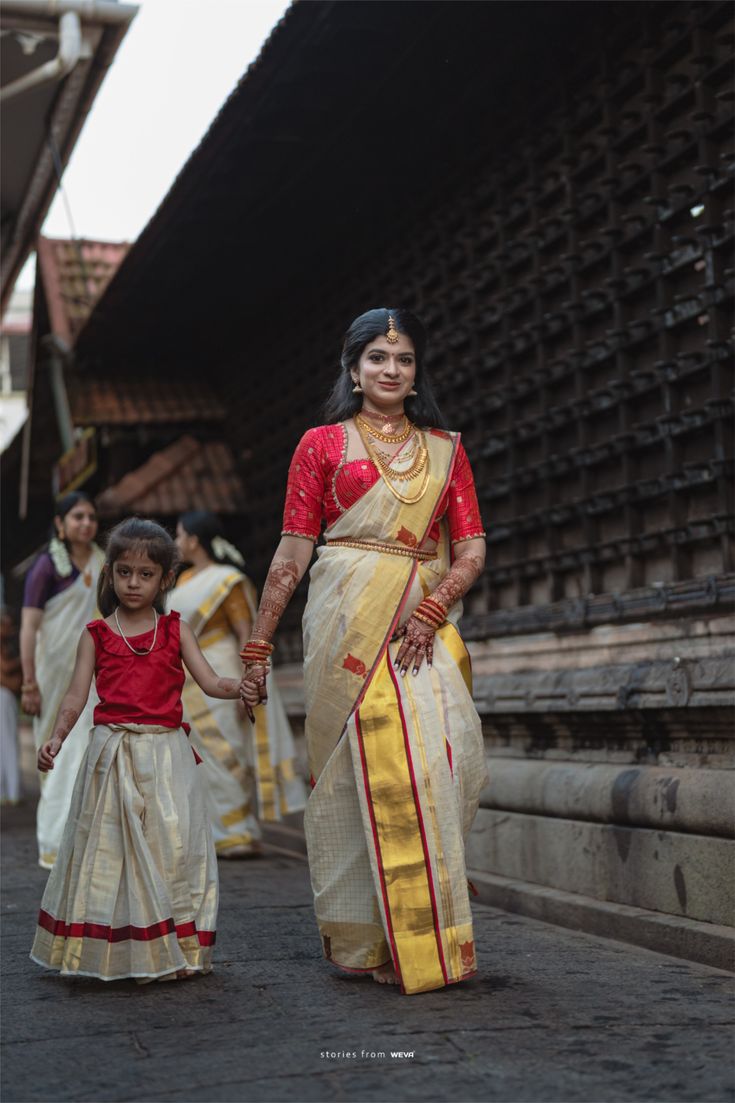
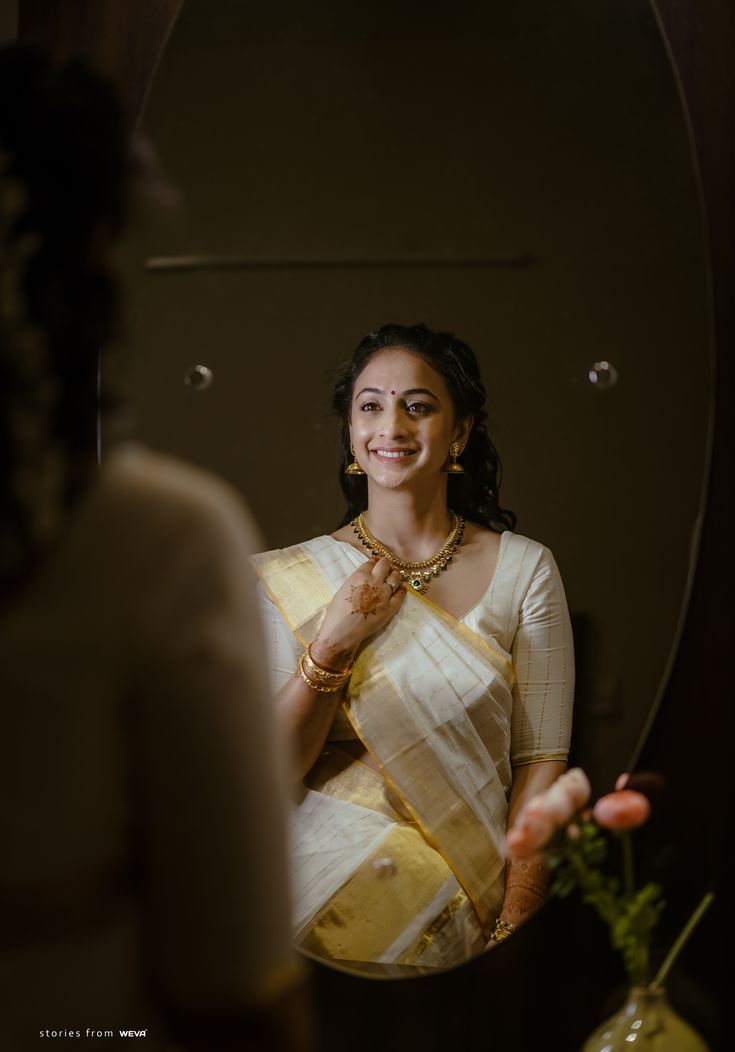
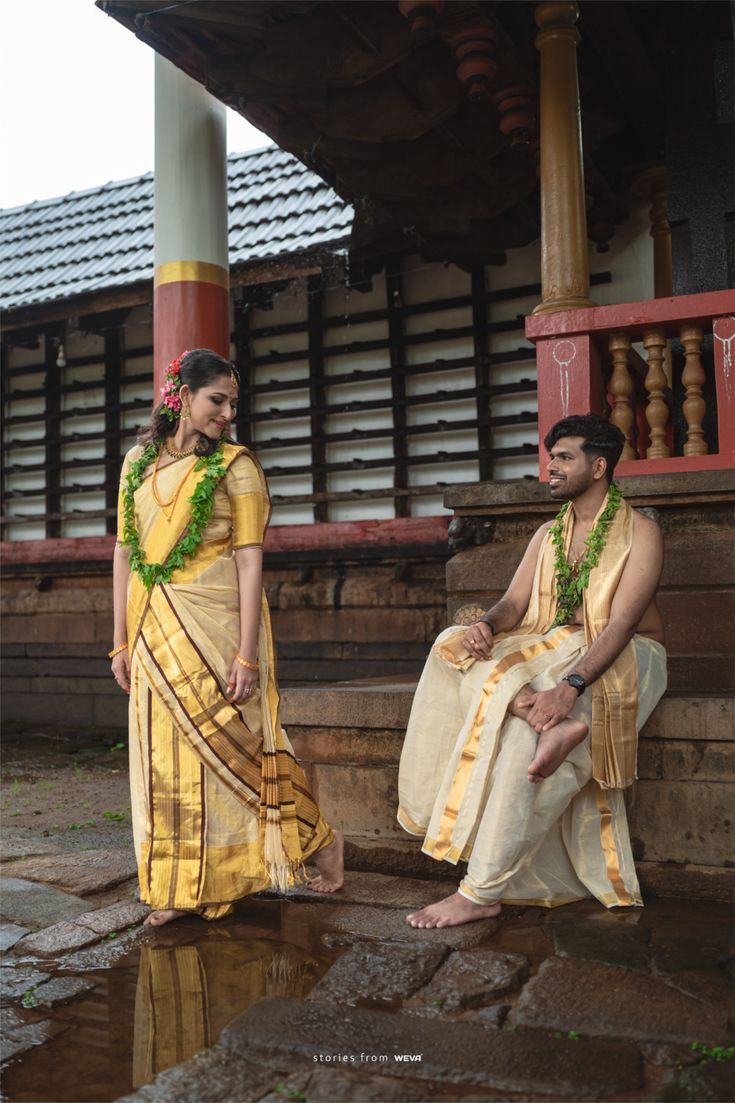
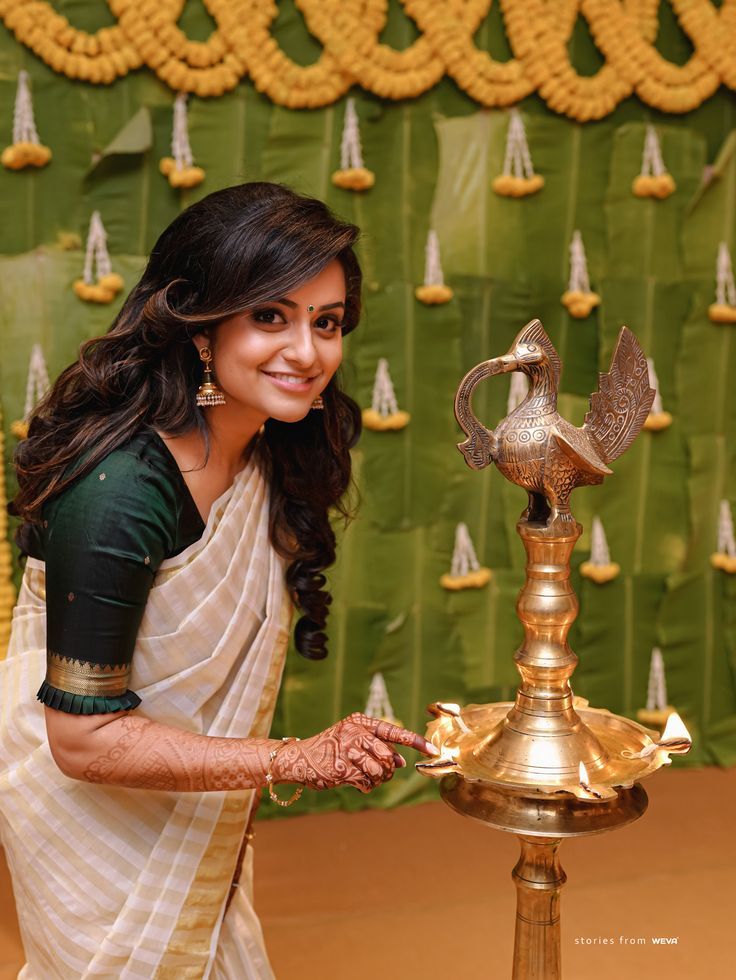
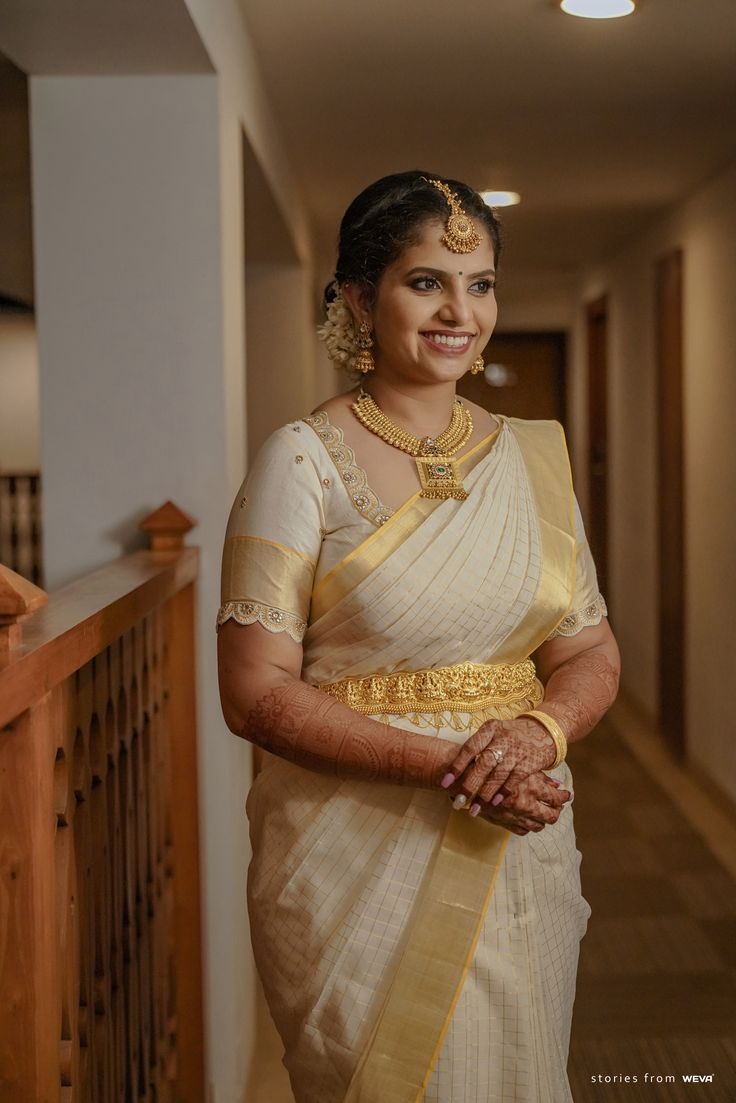
The Kerala Kasavu saree holds a special, sacred place in traditional South Indian
weddings. Crafted from pure unbleached silk or cotton with a prominent gold border,
this beautiful South Indian bridal look reflects the timeless beauty of a Kerala
bridal trousseau. To highlight, the shiny golden threads that form this border are
known as Kasavu. In simple words, Kasavu refers to the metallic zari thread used to
craft the saree’s iconic golden border. While the white or off-white fabric signifies
spiritual clarity and innocence, the golden border signifies divine blessings,
auspicious beginnings, and prosperity. The modern version of the Kasavu saree seen
today at Kerala Hindu weddings and traditional festivals originated from the
two-piece Set Mundu, or Mundum Neriyathum, a centuries-old South Indian garment.
Historically, the Kasavu border was handcrafted by dipping silver wires in pure gold,
adding value to the attire as cherished family wealth. The width of the golden border
varies depending on the occasion: while thick gold borders are dedicated to brides and
grand celebrations, narrower varieties are worn for daily use or temple visits. Because
the fabric is traditionally crafted from natural unbleached cotton, the garment suits
Kerala’s hot and humid weather perfectly. Beyond being wedding attire, the Kasavu
saree plays an important role in sacred marriage traditions. During the Pudamuri or
Mantra Koti ceremony in traditional Kerala Hindu weddings, a sacred Kasavu saree is
gifted by the groom to his bride in the wedding mandap. This ceremony symbolizes
his promise to protect, provide for, and honor her for the rest of their lives. Passed
down through generations, these sarees are deeply valued and treasured as family
blessings. Enjoy these beautiful Kerala wedding portraits handpicked by our best
South Indian wedding photographers to explore the latest 2026 Kasavu saree
trends!